AI Shopping Agents: How to Get Your Brand Picked | DS

AI Shopping Agents Are Choosing Brands Now. Will They Choose Yours?
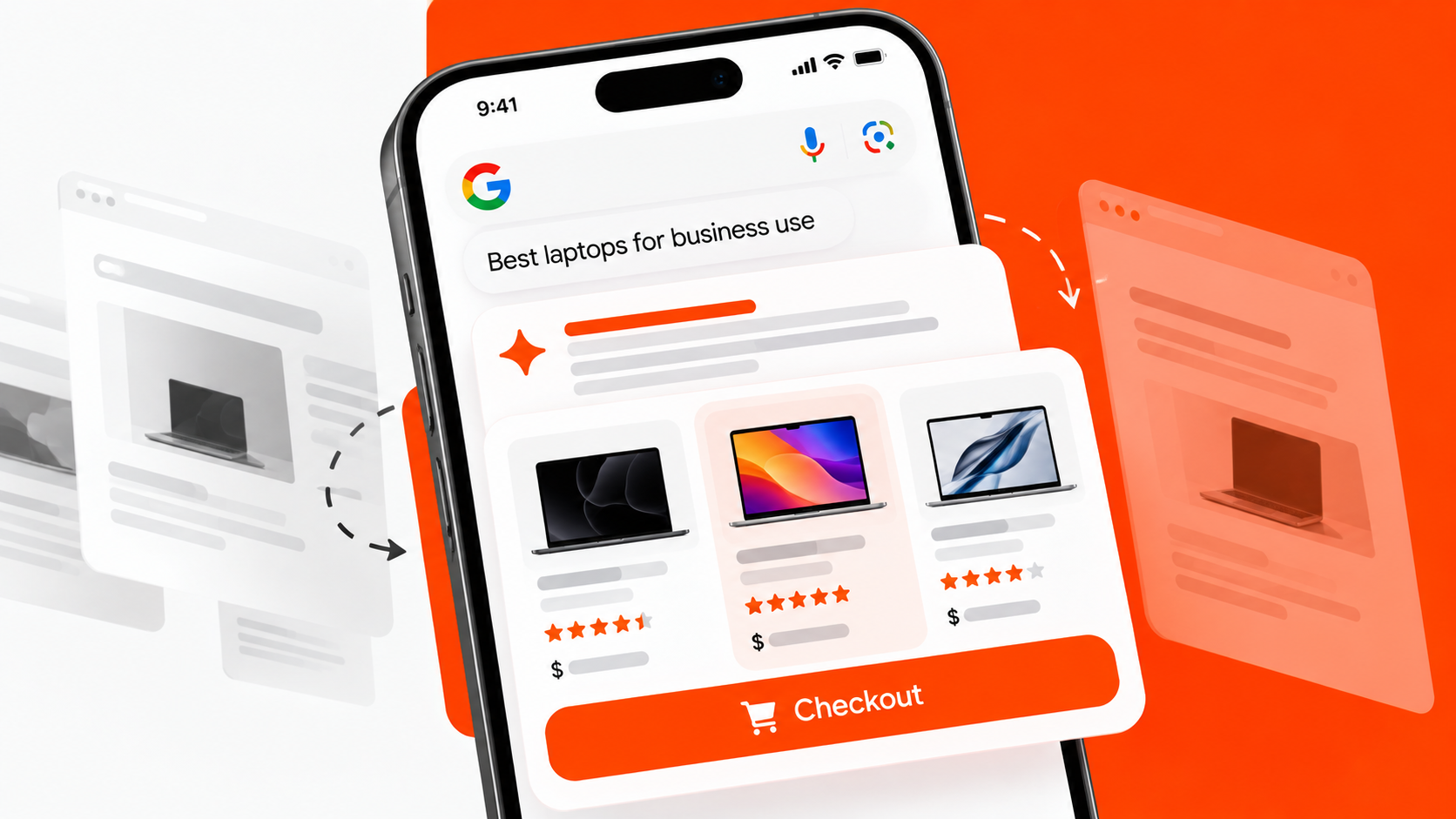
AI shopping agents can now research, compare, and buy for your customers. Meta's new Muse agent can check out with a built-in wallet. Google's AI Mode has a "Buy for me" button. And Amazon just blocked Meta's agent from its store. The fight over who controls the sale has started.
For business owners, the question is simple: when an AI picks for your customer, does it pick you?
If you read our take on how Google AI Mode is already cutting website clicks, this is the next step. First AI answered the question. Now it's making the purchase.
What just happened with Meta's Muse and Amazon?
Amazon blocked Meta's Muse shopping agent, while Shopify let it in. According to Retail TouchPoints, Meta launched Muse this fall as a personal AI agent that can fill out forms, negotiate for users, and check out with a Stripe-built wallet.
Amazon said no. It asked Meta to remove Amazon from the experience, saying Muse never identified itself when it accessed the store. Shopify took the opposite path: its merchants can let Muse shop their stores directly.
And Meta isn't alone. Google has rolled out agentic checkout in AI Mode and Gemini, with a "Buy for me" button live at selected U.S. retailers. Perplexity offers instant checkout through PayPal.
The takeaway: the biggest platforms are racing to own the moment a customer decides. Your brand needs to be ready for that moment, wherever it happens.
Are customers actually using AI to shop?
Yes for research, not yet for paying. A CI&T survey of 1,011 U.S. consumers found:
- 74% have used an AI agent like ChatGPT, Gemini, or Perplexity while shopping
- 90% have tried one or are open to it
- Only 27% are comfortable letting AI handle the full purchase
So today, AI mostly builds the shortlist. People still click buy. But that shortlist is where you win or lose. If you're not on it, you never get the chance.
The long-term trend points one way. Morgan Stanley predicts nearly half of online shoppers will use AI shopping agents by 2030, handing them about 25% of their spending.
What do AI shopping agents look for?
AI agents don't fall for a pretty ad. They compare facts. Price, speed, reviews, return policy, availability, and proof that you deliver.
Bain's global head of retail, Aaron Cheris, put the risk plainly to Retail TouchPoints: brands that come in second or third on every buying factor end up in no man's land. An agent will always find someone who's best on the one thing the customer cares about most.
There's an upside here for smaller brands. An agent hunts for whoever solves the problem best, not whoever bought the biggest ad, as one industry CEO told CryptoSlate. That levels the field for brands with a clear edge.
6 ways to get your brand picked by AI agents
1. Be clearly best at one thing
Pick the one thing you win on and say it everywhere. Lowest price. Fastest delivery. Best quality. A selection nobody else has. Expert service.
"A little better at everything" loses to agents. "The best at this" wins. If you can't name your one thing in a sentence, sharpen your positioning before anything else.
2. Make your product info easy for machines to read
Agents can only recommend what they can understand. Thin descriptions, hidden prices, and missing specs get you skipped.
- Write full, plain descriptions: what it is, who it's for, sizes, materials, specs
- Show prices, stock, shipping times, and return terms clearly on the page
- Add Product, Offer, Review, and Organization schema
- Keep the same facts everywhere: your site, Google Merchant Center, marketplaces
- If you sell on Shopify, review your settings for AI agent and AI channel selling
If your site wasn't built with this in mind, you need a website that machines can read as well as people.
3. Tell the agents about your offers
An agent can't recommend a deal it doesn't know about. Cheris advises brands to share enough data with agents that they know what you carry and why you're the better value, including promotions and exclusive offers.
Keep your product feeds and offer data current on the platforms where agents shop. Stale feeds mean stale recommendations.
4. Build proof an AI can count
Agents can't feel brand love, but they can count reviews. Make your trust signals easy to find and hard to argue with:
- Lots of recent reviews on Google and the review sites in your category
- A clear, generous return or guarantee policy
- Real case studies with real numbers
- Consistent ratings across every platform
5. Give people a reason to come direct
Don't let the agent own your customer. If every sale runs through someone else's AI, you lose the relationship, the data, and the margin.
Give buyers reasons to come straight to you: loyalty perks, members-only drops, better support, a community worth joining. This is why brand is capital. A brand people ask for by name is a brand no agent can replace.
6. Decide your agent policy now
Amazon chose to block. Shopify chose to open up. You need a choice too. For most growing brands, being open to agents brings more reach than it costs. But decide on purpose, track the sales that come from AI channels, and adjust.
That's what marketing that tests and learns across channels looks like in an agent-first world.
Does this matter for B2B and service businesses?
Yes, the same rules apply. B2B buyers already ask AI tools to compare vendors and build shortlists. An agent researching "best branding agency for SaaS" or "top logistics partner in Texas" weighs the same things: clear positioning, specific proof, and complete information. The businesses that show up clearly get on the list.
The bottom line
AI shopping agents don't kill brands. They kill blurry ones. When a machine is doing the comparing, being clearly the best at something, and proving it, is what gets you picked.
If your brand can't pass that test today, a two-week Brand Sprint is the fastest way to get clear on what you stand for.
Frequently asked questions
What is agentic commerce?
Agentic commerce is when an AI agent researches, compares, and buys products for a shopper with little or no human input. Examples include Meta's Muse, Google's agentic checkout in AI Mode and Gemini, and shopping inside ChatGPT and Perplexity.
Are shoppers actually letting AI buy for them?
Not fully, yet. A CI&T survey of 1,011 U.S. consumers found 74% have used an AI agent while shopping, but only 27% are comfortable letting one handle the full purchase.
Why did Amazon block Meta's Muse?
Amazon said third-party shopping agents should identify themselves and respect a store's choice to take part, and that Muse did not identify itself when accessing Amazon. Analysts at Bain also point to Amazon protecting its customer relationships and data.
How do I get AI shopping agents to recommend my brand?
Be clearly best at one thing, keep product and pricing data complete and machine-readable, share your offers with the platforms agents use, and build measurable proof such as reviews, clear return policies, and case studies.
Does agentic commerce matter for B2B and service businesses?
Yes. B2B buyers already use AI tools to research and shortlist vendors. The same rules apply: clear positioning, specific proof, and complete, structured information about what you offer.
Make your brand the obvious pick. Book your Brand Sprint intro call →